
popular WiFi routers and mesh prices
| router | speed | price |
|---|---|---|
| TP-Link | AC300 | $30 |
| Netgear with Armor | AX1800 | $150 |
| Ubiquiti UniFi AP | AC3000 | $200 |
| G Nest WiFI Pro router/AP | AXE4200 | $250 |
| Optus 5G WiFi modem | AC1200 | $216 |
| Netgear Orbi mesh, Router + Satellite | AC3000 | $350 |
AC1200 offers up to 1200 Mbps, and AXE4200 offers up to 4200 Mbps speeds. AC is Wi-Fi 5, and AX is Wi-Fi 6 standard.
Netgear RAX10 AX1800
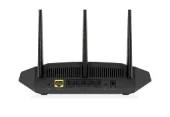
This Netgear router includes Armor, a built-in Bitdefender security service that provides network-level protection for all devices on your WiFi, even without antivirus installed.
The router supports dual-band WiFi on 2.4 GHz and 5 GHz, with a combined theoretical speed of up to 1800 Mbps, hence the name.
It suits a small home or light office and gaming use. Realistically, it handles about 10 to 30 active devices well. It has four Gigabit Ethernet LAN ports and works with HFC and other NBN modems.
It costs around $150, plus an annual Armor subscription of approximately $100, covering up to 50 devices across computers and mobile devices. This is more cost-effective than buying separate security subscriptions for each device.
It is a simplified successor to the popular R7000P and does not include a USB port. The RAX20 model costs slightly more and adds USB support for connecting external storage for basic file sharing.
How to buy
WiFi products supplied with WiFi installations in Sydney, predominantly Northern Beaches.
Google Nest WiFi Pro router and mesh

The Google Nest Wifi Pro mesh system with Wi-Fi 6E delivers higher speeds, lower latency, and increased capacity. It provides seamless whole-home coverage, supports up to 4200 Mbps combined bandwidth. A typical bundle with one router and two satellites is priced around $500, while individual units cost approximately $250 and can be used either as a router or as a mesh extender.
Nest Wifi Pro is not compatible with previous Google Wifi or Nest Wifi mesh systems. It includes a two-year limited hardware warranty and receives security and software updates for approximately five years from the product release date.
Google Wifi is usually sold in two- or three-pack bundles to form a mesh network, although each unit can also operate independently in router mode. It supports IEEE 802.11k and 802.11v for automatic client roaming, allowing handover between access points as you move around the home. In practice, roaming behaviour varies significantly between manufacturers and client devices, and interoperability is often inconsistent, especially with devices such as iPhones and Sonos systems.
Nest Wifi Pro is a tri-band system operating on 2.4 GHz, 5 GHz, and 6 GHz bands with a combined AXE4200 class throughput. The 6 GHz band enables higher peak speeds and lower interference for compatible Wi-Fi 6E devices. Each unit includes two Gigabit Ethernet ports for wired backhaul or device connectivity.
Google Wifi is managed exclusively through the mobile app. Compatibility with NBN services depends on the ISP. Some providers, including TPG and bundled-service ISPs, restrict or do not support third-party routers, which may prevent Google Wifi from operating as the primary router. In these cases it may only function in access-point mode behind the ISP-supplied modem/router.
TP-Link Home Routers
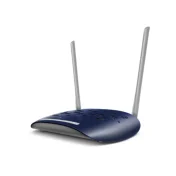
TP-Link home routers are widely known for their low price and simplicity. They are commonly used in entry-level and basic home networking where easy setup and stable everyday performance are the priority.Some older or budget models still use 100 Mbps Ethernet ports, which can cap real-world internet throughput to below 100 Mbps. This is sufficient for NBN 25 and 50 plans, but will underperform on NBN 100 and faster plans where Gigabit Ethernet is required to fully utilise the connection.
On the positive side, TP-Link devices generally offer stable firmware, long vendor support cycles, and good compatibility with Australian NBN services.
When new routers improve WiFi speed, and when not?
WiFi routers must have the internationally allowed maximum WiFi power for various reasons, mostly for optimised performance and safety. Because of this, no router is substantially better when it comes to the WiFi range. Typically, routers and extenders provide WiFi within 30 metres in open space, less through the walls.
Although routers differ significantly by features and ability to handle high speed WiFi connection with many connected devices simultaneously.
Some WiFi routers are more stable than the others. They may use better antennas and other features such as beamforming - focusing power on the WiFi device in use. The WiFi quality also depends on your device's compatibility with the WiFi router. Expensive routers may not even connect to some devices such as older Sonos models if not configured accordingly.
And, of course, WiFi speed never exceeds the incoming internet speed you're paying for, regardless of how good your router is. For example, if you pay for a 25Mbs NBN package, the speed of WiFi will be no more than 25Mbs even though your $1000 WiFi mesh system has a 5000Mbs capacity.